About this teaching resource
It’s not only the inside of words that can confuse writers! If your writers have got spelling patterns under control, and are spelling huge banks of words correctly, then affix and syllable sorts enable writers to explore the ways in which syllables, prefixes and suffixes impact on the spelling and meaning of words.
This is where word study gets interesting: the impact of open and closed syllables, what happens to base words when adding prefixes and suffixes, interesting discoveries to be made around compound words, how roots behave differently than base words!
How to:
- Choose from a range of prefix sorts: Look at the needs of your students to choose the sort that will most support them as readers and writers.
- Introduce students to the prefix exploration: Use key words as examples
- Collect, categorise and classify words
- Determine prefix meaning
Included in each Prefix Exploration:
- A focus prefix
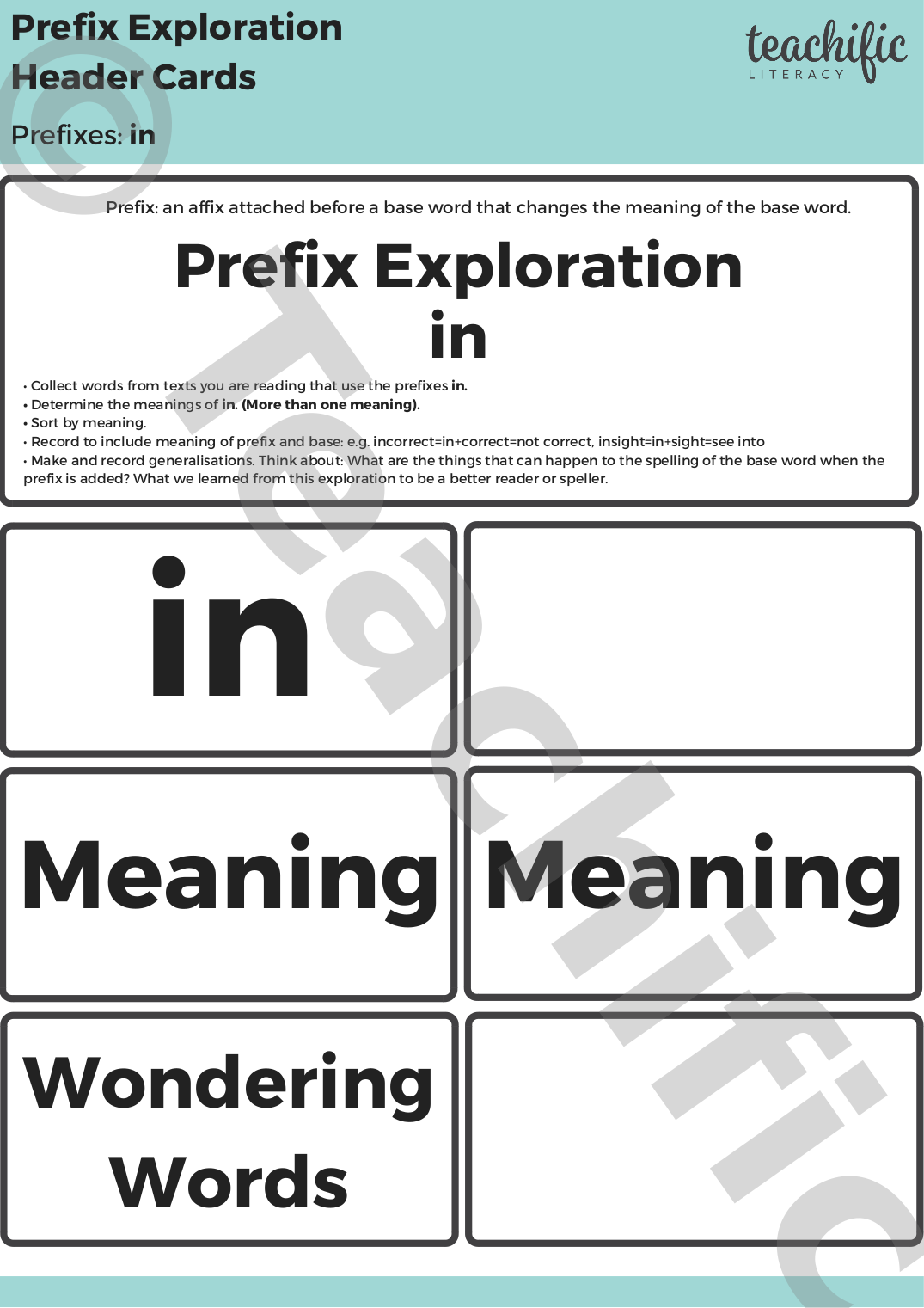
- Prefix header cards (including Wondering Words, for the words that raise questions and wonderings!)
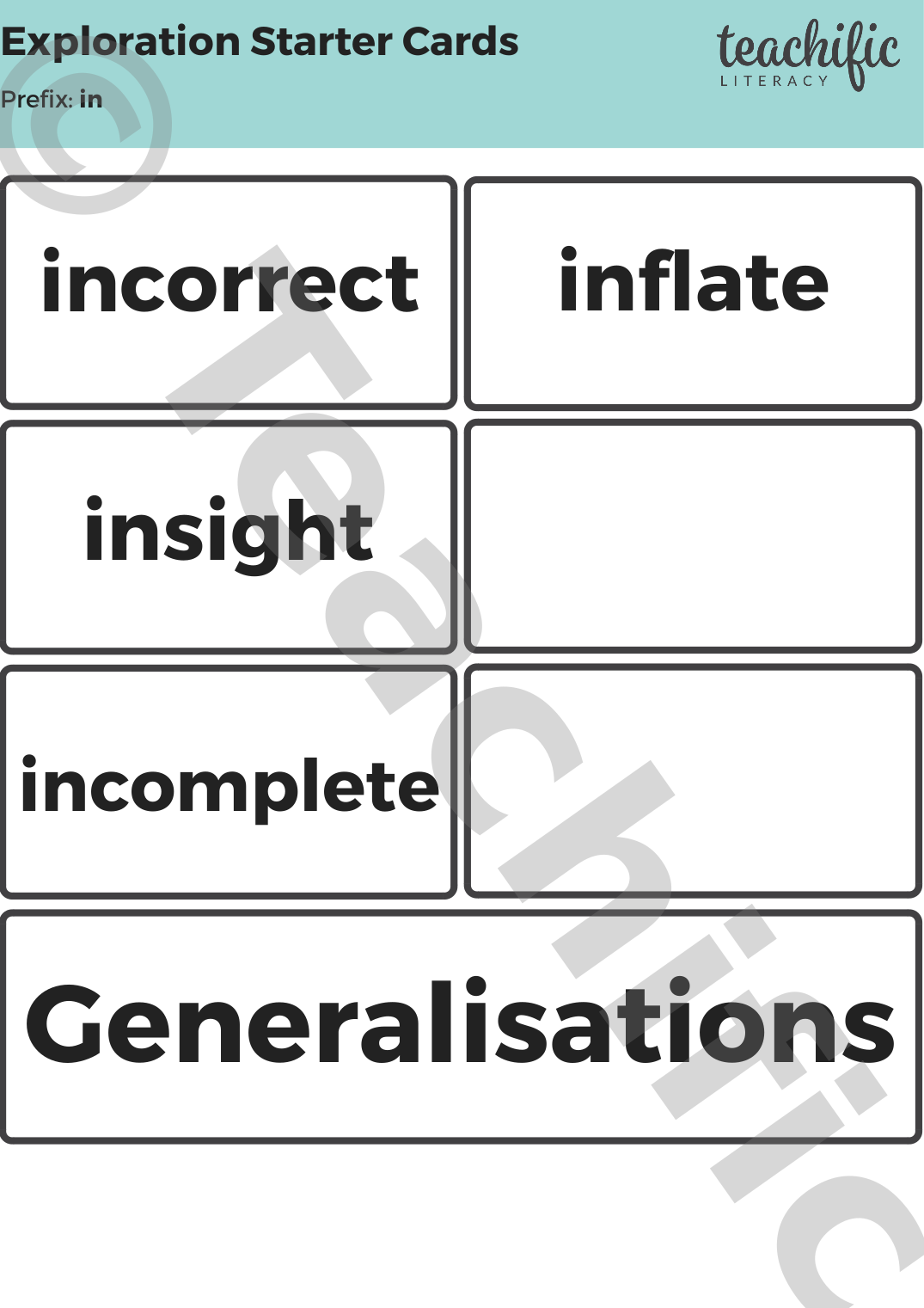
- Key Word header cards
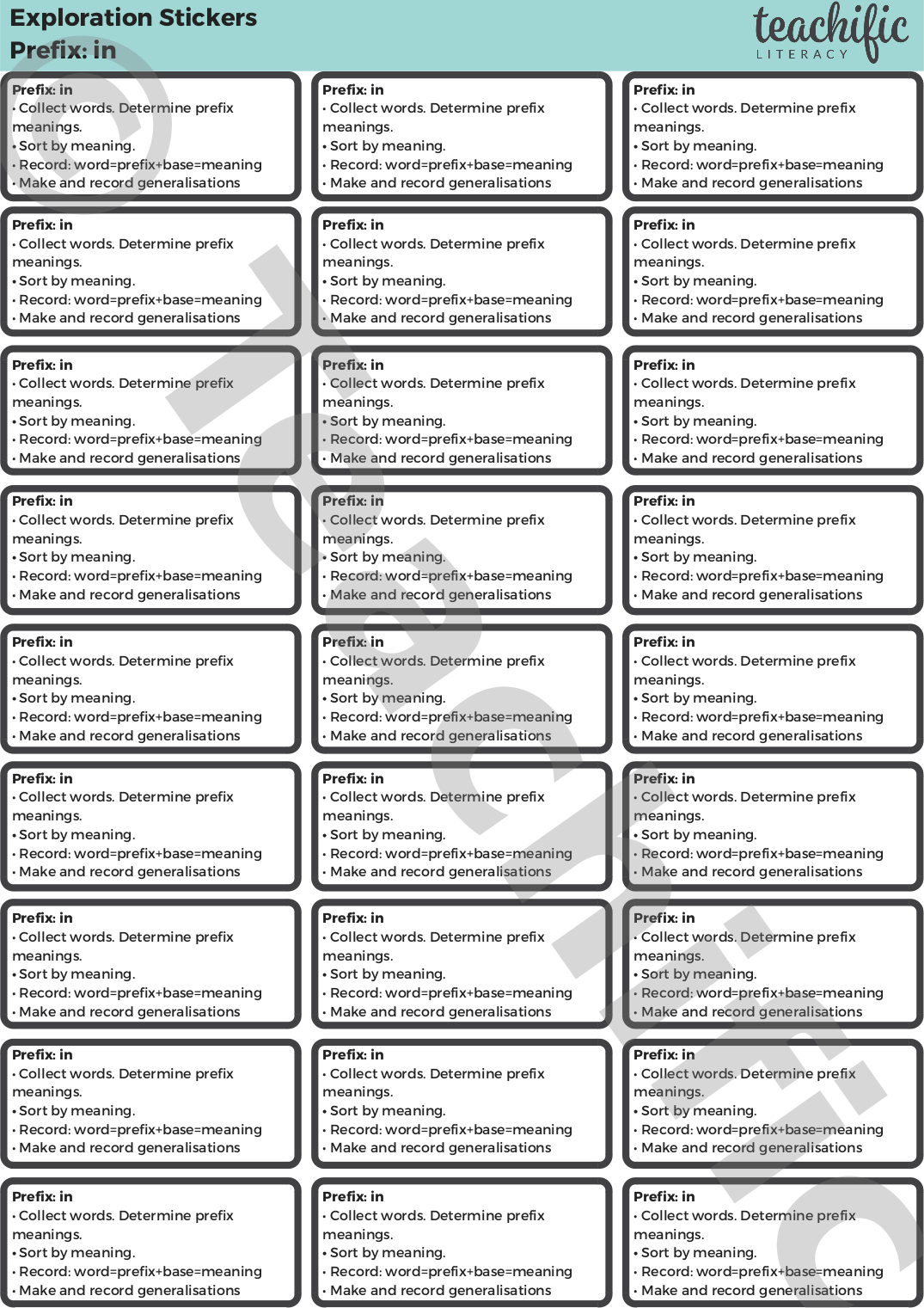
- Exploration Stickers
- Word collecting cards
Can also be useful for supplementing Words Their Way.
Australian curriculum alignment
Year 3
Year 4
Year 5
Year 6
Related books


Reviews
There are no reviews for this resource yet, why not write one?
Report a problem
Please log in to report a problem with this resource